If you are struggling to fall asleep at night then try a warm, soothing, milky drink after dinner. Although cold milk is known to thicken mucous secretions and so is best avoided if you are prone to post-nasal drip or sinus problems, according to ayurvedic medicine heated milk does not do this.
Our cardamon milk recipe below is adapted from the ayurvedic recipe for “golden milk” which has been used for centuries to help induce a good night’s sleep. Golden milk usually contains turmeric but as my 10-year old daughter dislikes turmeric (and she made the attached video), we left it out of the recipe.
Enjoy this delicious, calming, warm drink as the perfect addition to your bedtime routine. It only takes a few minutes to make and really helps induce sleep and relaxation. Best of all, kids love it !
When discussing hormones it’s difficult to know where to begin. We could start by looking at different disorders related to hormonal problems: for example premenstrual syndrome, menopausal problems, infertility, thyroid disorders, weight problems, depression, chronic fatigue….the list is endless.
Or we could start by looking at different treatment options and how they work. For example, medication or supplements.
Yet personally, I think the best place to start is by looking at your day-to-day life and working out why your hormones aren’t behaving as best they should. Often it is because you are simply ignoring (or avoiding) at least one of the basic rules of good health:
manage your stress
eat well
sleep well
exercise well.
So simple to say yet actually so difficult to follow!
Over the next few blogs I’m going to cover what really damages your hormonal cycles. Today we start with something that most of us struggle with on a day-to-day basis – stress.
Manage your stress.
I know it is easier said than done, but chronic stress wreaks havoc on your hormones and if you have a hormonal problem you really need to assess your stress levels and ability to cope with stress.
Eating well, exercising regularly, giving yourself “time-out” and also facing what is causing stress in your life are absolutely vital to the health of your hormones.
Stress, cortisol and the “pregnenolone steal”
The primary hormone your body releases in times of chronic stress is cortisol. The building block for cortisol is pregnenolone, which happens to be the same building block for your sex hormones (oestrogen, progesterone, testosterone).
If you have chronically high cortisol levels from stress you will not produce sufficient quantities of sex hormones and so can suffer from imbalances such as infertility, menstrual disorders, mood swings and low libido.
Stress, cortisol and your blood sugar levels
One of the functions of cortisol is to raise your blood glucose levels. However, constantly high levels of glucose in your blood stream lead to insulin resistance and the effects of insulin resistance include fatigue, increased appetite, abdominal weight gain, and eventually Type II Diabetes Mellitus.
Stress, cortisol and insomnia
In addition, chronically high levels of cortisol will upset your sleeping patterns. Cortisol is released in a cyclical rhythm, peaking in the mornings at approximately 8am and then waning in the afternoons, between 3-4pm.
This rhythm enables you to get up and function in the mornings and then relax and ‘switch off’ at the end of the day. If, however, cortisol is constantly being released into your bloodstream due to ongoing stress, then this natural rhythm and hence your sleeping rhythms become displaced.
High levels of cortisol circulating in your blood stream in the middle of the night means you will be wide awake in the middle of the night. And when these levels crash early in the morning you will too.
So dealing with stress is of paramount importance to the general functioning of your hormones.
What is important to be aware of is that chronic stress comes in many forms, not just the obvious emotional, financial, relationship, work stress that we are all so aware of – long term illness, injury, pain or inflammation are also stressors to the body, raising cortisol levels and disrupting our hormonal balance.
According to the American Sleep Association, approximately 30% of adult Americans suffer from insomnia. That is nearly 1/3 of adults! Are you one of those statistics? If you are, then you certainly are not alone.
So what can you do about it? The best place to start with getting a good night’s sleep is what we call “sleep hygiene”. Sleep hygiene involves a few simple, easy to follow steps to improve your sleeping environment and routine.
Melatonin: The Hormone of Sleep
Our bodies love routines and rhythms and many of our hormones are secreted according to very specific physiological rhythms.
One such hormone is melatonin. It is the hormone that makes us sleepy and helps us sleep. Ideally, it is released at night in darkness and its release is stopped or inhibited when the eyes are exposed to light in the morning.
Sunlight wakes you up.
The Circadian Cycle
Produced by the pineal gland, melatonin helps set the timing of our body’s biological clock. This timing is known as the circadian cycle or rhythm and is a 24-hour cycle of physiological processes associated with periods of light and darkness.
So the first step in getting a good night’s sleep and overcoming insomnia is to ensure your body’s biological clock is ticking correctly – that melatonin is being released at the right time of the day .
When our eyes are exposed to light then melatonin is NOT released. So what does this mean? Simple……expose your eyes to too much light at night and you will be awake at night. Think….televisions, cell phones, laptops….bright lights of any kind inhibit melatonin release and keep you awake.
Now that you understand the basic physiology of sleep, follow these three steps to get yourself sleeping at NIGHT and being awake during the day.
Can’t keep awake?
I must warn you, following these three steps is not as easy as I make it sound. This is because you have to stick to the same time and same routine every single night for about three weeks. So before you begin, take a look at your work and social schedules and really think of a routine that will fit in with those.
Step 1: Reset Your Body Clock
As I mentioned earlier, the first step to getting a good night’s sleep is to establish a routine. It is really important that you decide on what time you want to go to sleep at night (i.e. when you want to encourage the release of melatonin) and what time you want to wake up in the morning (i.e. when you want to stop the release of melatonin). Then stick to these times no matter what!
Remember, you are re-setting your circadian rhythm. Your body needs to get into a 24-hour routine of having light and dark exposure at the same times every 24-hours. You want to feel sleepy at night and awake in the morning and not the other way around.
You can reset your body clock.
So here is what you need to do to reset your body clock:
Get into bed at the same time every night.
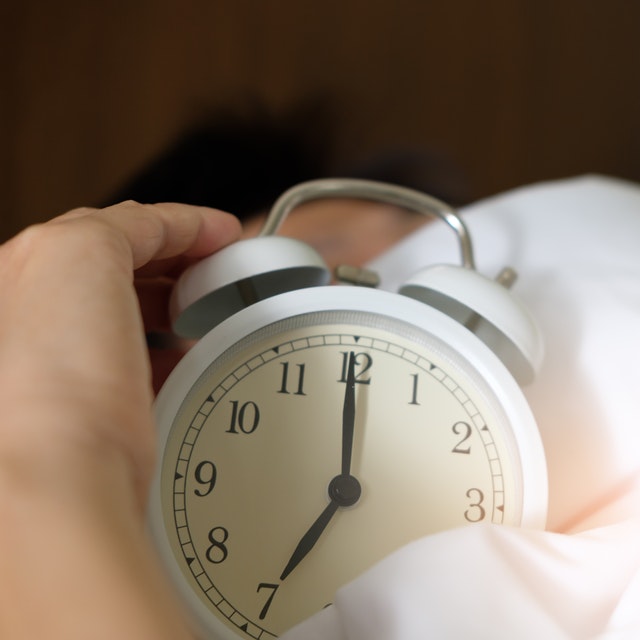
Set your alarm for the same time every morning.
As soon as your alarm rings expose your eyes to bright light for a few minutes –it is very important that you do this at the same time every day.
Step 2: Have a Bed-time Routine
Again, it is all about that routine. Create a little ‘ritual’ that signals to your body and brain that it is time to slow down, wind down and relax. Try to start your routine about an hour before you want to go to sleep and stick to the same time and the same routine every single night.
Do not eat a heavy meal for 3 hours before you go to bed.
Warm up your body – have a warm bath/shower or do some gentle stretching.
Get into bed and relax for at least 30 minutes – read, chat to a partner or simply daydream!
Most important – absolutely NO technology, cell phones, laptops, television etcetera in this last hour before bedtime. If you really struggle with insomnia then no technology for at least two hours before sleep.
Step 3: Clear Out Your Bedroom
Your bedroom is for sleep, relaxation and sex only! There must be no TV, cellphones, ipads, laptops, flashing digital clocks etcetera in your room. It needs to be a quiet, peaceful place that you can retreat to and switch off in.
I suggest that the first thing you do when you get home today (or if you are at home take a break and do this right now) is go into your bedroom and spend ten minutes turning it into a peaceful retreat. It is quick and easy to do and will make a difference to your sleep.
Get rid of all the clutter in your room. Start with your bedside table and work around your room. Take out all bills, papers, work, things you “are meant to do when you eventually get the time to do them” and put them into a different room. These are not the things for a bedroom!
Now that you have taken out all the clutter sit on your bed and look around your room. You should love everything in your room – everything you look at should be calm, peaceful and remind you of who or what you love. Your bedroom is your sanctuary, your refuge, your escape – your quiet place to relax and switch off.
Now look at the light in your room. You need to have a bright light for early in the mornings when you wake up and a calm, gentle light for your last hour before you go to sleep. In addition, when you turn out the lights your room needs to be as dark as you can possibly get it.
Basic sleep hygiene makes a huge difference to most people’s sleep and it should improve yours too. Follow these three steps for three weeks and then let me know how you are doing. If, after three weeks of strictly adhering to the above, you still have had no change in your sleep then we need to take a deeper look at what is going on.







 Site Title